Friday Facts #11 Infected atopic dermatitis
|
author/source: DrB

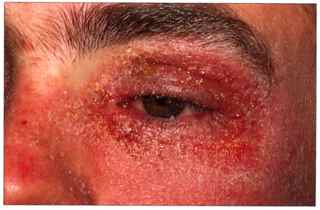
- When the conventional treatment of acute atopic eczema does not respond as it should to conventional topical treament with emollients and topical steroids, the possibilty of a complicating infection needs consideration.
- Bacterial infection of atopic eczema is most commonly due to staphylococcus aureus. The inflammation that accompanies an infection can be associated with an increase in itching, together with a weeping wetness and crusting (see above).
- The source of the infection may be the nose, carried to the skin by the finger and scratching: swabs from the nose and the eczema are taken, to identify the germ and its sensitivity to antibiotics.
- Although antibiotic treatment as a cream can be effective, hypersensitivity reactions to topical antibiotics are notorious, and this further delays healing.
- Therefore taking a course of antibiotics by mouth may be preferable. When taking a course of antibiotics it is important always to finish the course, even if the infection seems to clear up early on.
Bacterial infection is a common complication frustrating the successful treatment of acute eczema
Go HERE for a more detailed account